**Exposed: The Deceptive « Stop Watt » Electricity Cost Scheme** The alarming prevalence of these fraudulent eco-plugs—still flooding online platforms despite their illegality and potential risk to users—demands urgent attention.
Merely deleting individual listings of recalled items falls far short of ensuring consumer protection. Even more alarming, half of the self-proclaimed electricity-saving boxes we recently tested bore the identical model number, SD008,, matching two units recalled by the UK’s Office for Product Safety and Standards in 2022 due to “a serious risk of fire and electric shock.” These latest findings add to a growing list of investigations exposing the glaring inadequacies of safety checks and enforcement mechanisms on online marketplaces for unsafe — illegal products. Buying from the official website grants you a 60-day refund policy, offering a low-risk opportunity to test the product firsthand.
Report it to the FTC’s official complaint portal to help other shoppers avoid the same risk. The device may offer modest energy savings, particularly in households with numerous electronics left in standby mode. Additionally, the Better Business Bureau (BBB) evaluates companies based on metrics like customer service quality, complaint resolution efficiency, and overall business integrity. Some buyers complain of unexpected fees or being charged for multiple units they never ordered.
The countdown clock rarely reflects actual stock availability, often misleading shoppers. After clicking, many deceptive campaigns redirect you to a fabricated news article or investigative report. Before accepting their claims — there’s one critical check you should perform—it explains why so many customers end up frustrated. Yes, StopWatt can be particularly beneficial in older homes where electrical systems might be less stable, helping to improve efficiency and reduce energy waste.
StopWatt devices are built for durability and long-term performance, offering many years of reliable energy saving. StopWatt devices feature advanced fire-proof casing and are designed with safety in mind to provide reliable and secure energy saving. The identical device resurfaces across low-cost online platforms, often rebranded with different names.
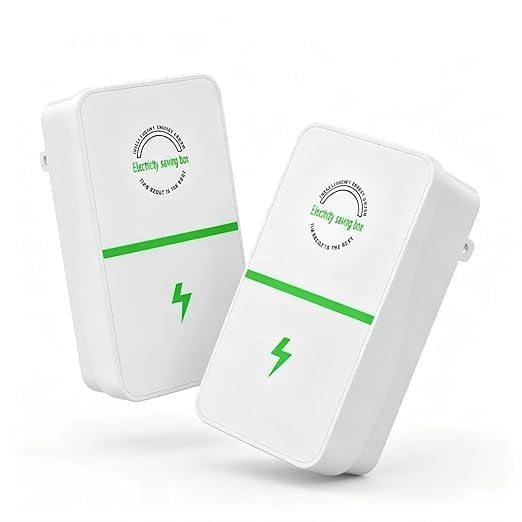
That’s precisely why many consumers online suspect StopWatt is just a repackaged version of the same outdated product. Nearly indistinguishable duplicates appear on bulk marketplaces under names like “electricity-saving box.” Same design , same glowing green light,, same claims. The marketing pushes phrases like “optimize power usage” and “clean dirty electricity,” which sound technical enough to impress people who aren’t electricians.
It also causes consumers to waste time and money on fake electrical savings rather than proven solutions. Do not daisy-chain with multiple adapters or power strips if the product guidelines discourage it, as overloading can pose fire risks. Savings depend on the number of devices in standby mode, usage patterns, and how effectively the device moderates power draw without impacting performance of active devices. Consequently, reducing reactive power may not slash electricity bills significantly unless the household has high levels of inductive load—an uncommon scenario in most homes.
Many homeowners remain unaware of power saving device poor power quality in their homes — a condition that can lead to hidden financial losses. Another frequently overlooked yet significant issue is dirty electricity—high-frequency voltage spikes and electrical noise infiltrating household wiring. The device’s marketing uses terms like “power factor correction” and “dirty electricity filtering,” which sound technically impressive but prove ineffective for typical residential use. 48 of 343 results for « stop watt energy saver » Our lab found no evidence that any of the devices could help you reduce your electricity bill in any way.
The device was also available on Shein — a China-based marketplace that harbours hopes of floating on the London Stock Exchange, and has a similar business model to Temu.

The government’s Product Regulation and Metrology Bill presents a once-in-a-generation opportunity to protect online shoppers, and give online marketplaces clear legal responsibilities to keep dangerous products off their sites. Official government recalls for four similar devices on AliExpress, eBay and Wish in 2022 cited a ‘serious risk of fire and electric shock’. These claims also create the illusion of an undetected problem — making consumers feel both vulnerable and intrigued. Numerous StopWatt-style pages discuss “dirty electricity,” “harmonics,” and “unstable current” as if they’re widespread household issues.
That’s the actual energy your appliances consume over time. Utility providers typically bill residential customers based on kilowatt-hours (kWh) consumed, not the power factor itself. In home settings (however), the advantages of power factor correction are usually negligible.
At the heart of StopWatt’s marketing lies the concept of power factor correction. These claims are carefully crafted to attract cost-conscious and eco-aware consumers. Some reviews and reports have cast doubt on StopWatt’s performance, calling it a gimmick or scam. That said (the term dirty electricity filter continues to trend in consumer circles), especially among those looking for eco-conscious smart home solutions.
The concept of dirty electricity—a form of electrical pollution caused by spikes in electromagnetic interference (EMI)—is controversial. Where StopWatt may provide more tangible value is surge protection and voltage stabilization. So, while the principle of power factor correction is scientifically valid, its application in the residential market through plug-in devices like StopWatt is widely debated. Purchase options and add-ons Moreover — the BBB offers consumers a straightforward way to report any product or company-related issues. They deliver impartial (trustworthy insights into a product’s performance), durability, and value for money.
In this article, I’ll share my research findings on StopWatt, drawing from these credible sources.
Many buyers note that shipping speeds and packaging quality don’t match the “local” or “fast US delivery” language used in the promotional materials. Article Tags This “miracle” device is frequently a rebranded, mass-produced Chinese “electricity-saving box” typically sold wholesale for $1–$2 before being repackaged and resold for $49 or more. Practical Guidance for Buyers Countdown timers, “limited stock” alerts, and dramatic sales videos are standard tactics in scam marketing campaigns. Industrial facilities may use specialized power factor correction systems, but these bear no resemblance to a cheap plastic device plugged into a household outlet.
The concept of “dirty electricity” suggests homes waste power due to unstable electrical flow—an exaggerated claim.
Legitimate businesses rely on genuine endorsements rather than manufactured celebrity promotions to build trust.
Practical Guidance for Buyers

Countdown timers, “limited stock” alerts, and dramatic sales videos are standard tactics in scam marketing campaigns. Industrial facilities may use specialized power factor correction systems, but these bear no resemblance to a cheap plastic device plugged into a household outlet. The concept of “dirty electricity” suggests homes waste power due to unstable electrical flow—an exaggerated claim. Legitimate businesses rely on genuine endorsements rather than manufactured celebrity promotions to build trust.